
Eastern bluebirds are often classified as an urban-adapting species. Bluebirds are second cavity nesters, frequently settling into artificially made nest boxes in human-dominated landscapes. These landscapes are filled with various anthropogenic noise sources such as traffic, construction, and other forms of human activity. High levels of anthropogenic noise negatively impact the health and well-being of both humans and animals alike. Despite this fact, Eastern bluebirds willingly breed in nest boxes located in noisy areas, despite it being detrimental to their reproductive success. Previous studies have found that bluebird pairs nesting in areas with loud anthropogenic noise exhibit reduced hatching success and smaller brood sizes.
We hypothesized that this decrease in reproductive success is due to anthropogenic noise pollution disrupting typical incubation and nest attendance behaviors in Eastern bluebird pairs. To test this, we examined time-lapse photos taken at nest boxes placed along an anthropogenic noise gradient. Nest boxes were classified to be under either loud (>70dB) or quiet (<70dB) chronic traffic noise, and half of the boxes in each category received additional playback of episodic construction
noise. This way, we could examine the effect of both chronic and intermittent noise on nest attendance behavior.
We found that females nesting in otherwise quiet areas but exposed to episodic construction noise displayed an unusually frequent head-poking behavior. These females were consistently poking their heads out of the hole of the nest box and looking around. Based on the distance between the bottom of the nest box and the hole, we know that for a female to engage in this behavior, there must be a loss of contact between her body and the eggs. For proper incubation, the eggs must be kept within the optimal temperature range of 35°C to 39°C, and falling below this range can lead to egg mortality. The female repeatedly getting up from the nest to poke her head out results in frequent small drops in temperature that negatively impact hatching success. Additionally, females under episodic construction noise displayed more frequent gaping. When gaping, an individual holds their beak open for a prolonged period. This is a clear sign that the females under
these noise conditions are strongly disturbed and agitated.
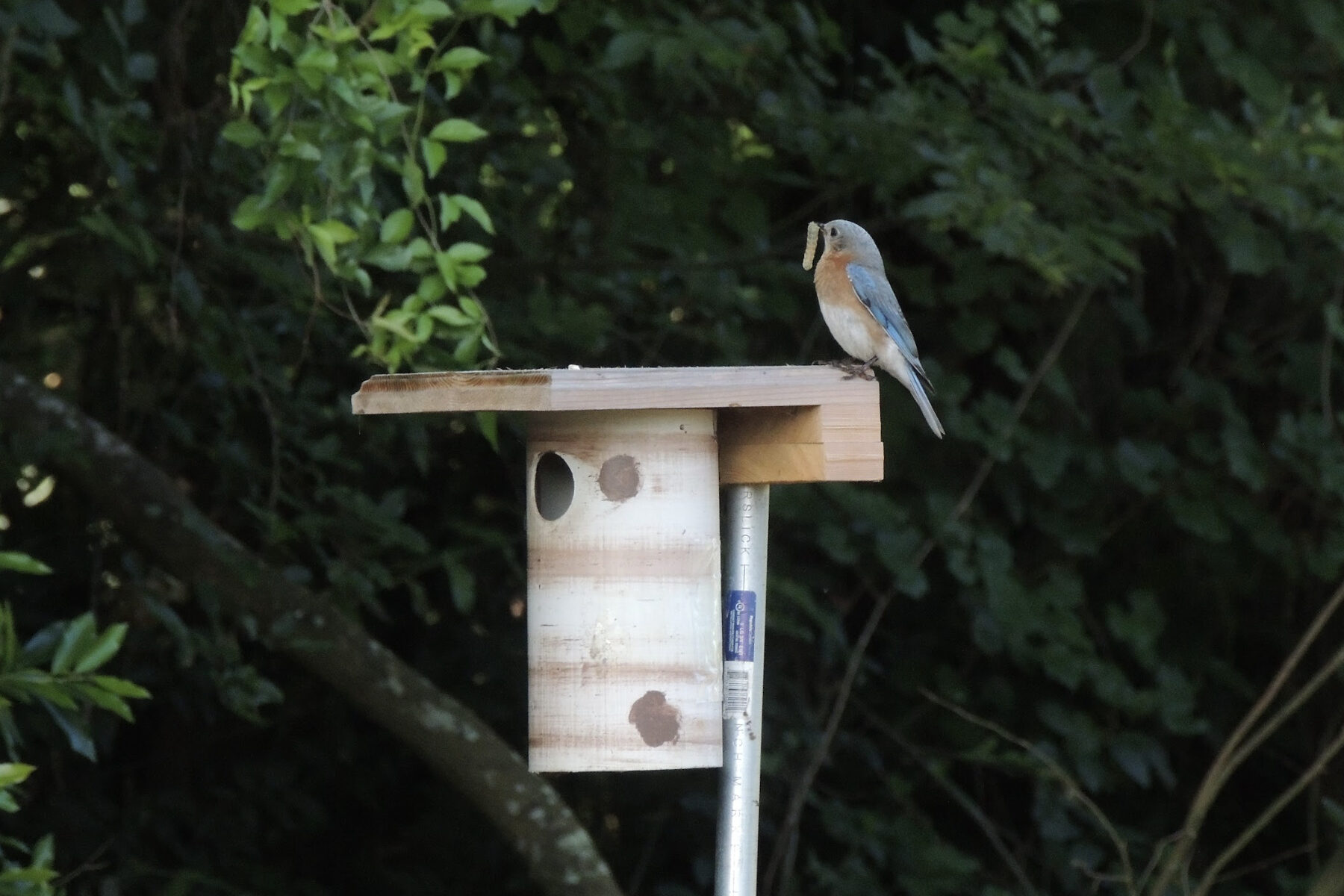
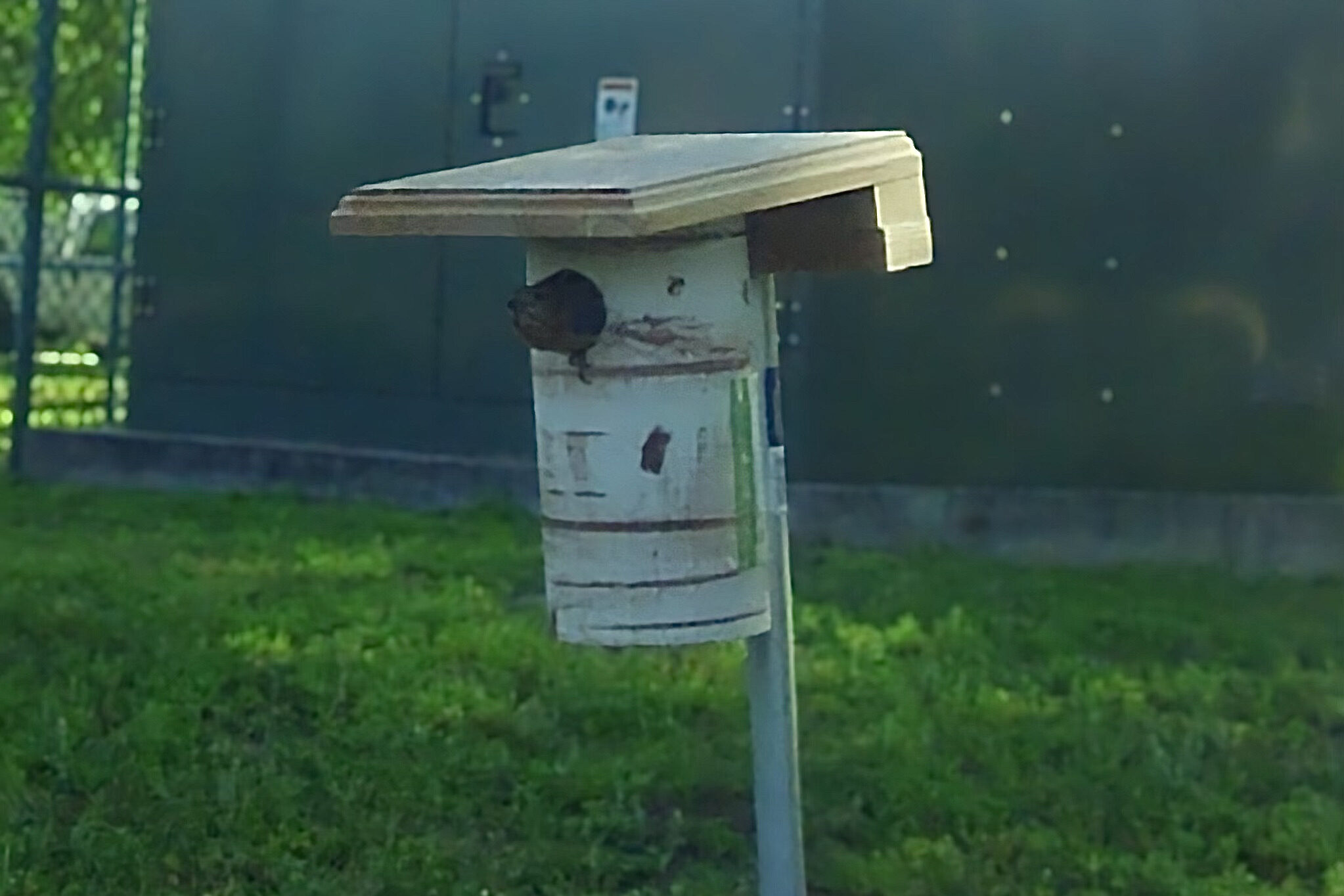
We suggest that changes in male nest attendance behavior could potentially exacerbate this agitation. Male bluebirds play a vital role in the incubation process. They often bring back food for the incubating female, allowing her to spend more time on the eggs. Additionally, males will perch on top of the nest box, a territorial defense behavior often seen in second cavity nesting birds. We found that males in areas of high chronic traffic noise spent significantly more time perched on top of the box than in entirely quiet areas. However, the male was almost completely absent from the nest box when it came to quiet areas exposed to the episodic construction noise. The male’s absence from the nest box for prolonged periods of time likely contributed to the stress of the female and, in turn, the disruption of incubation behavior, leading to poor hatching success.
Overall, we found intermittent anthropogenic noise more disturbing to Eastern bluebird pairs than chronic noise. This is likely due to the fact that individuals are eventually able to acclimate to chronic noise and return to typical nest attendance and incubation behaviors. Our study also provided evidence for predictions made in previous studies that noise-induced female restlessness was heavily contributing to the reduced hatching success seen under intermittent anthropogenic noise conditions.
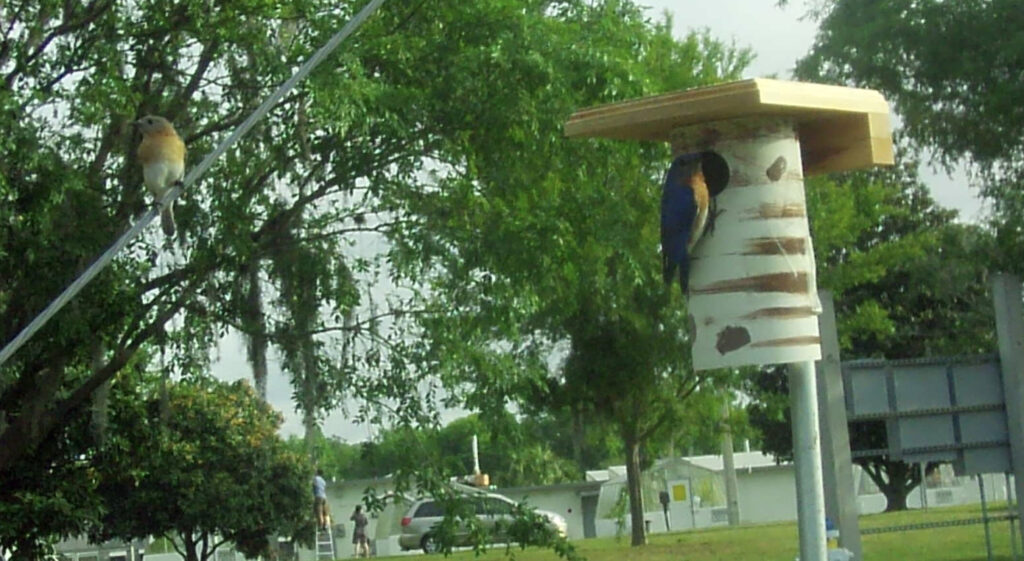
Footage from camera traps provided by Megan Caufman.
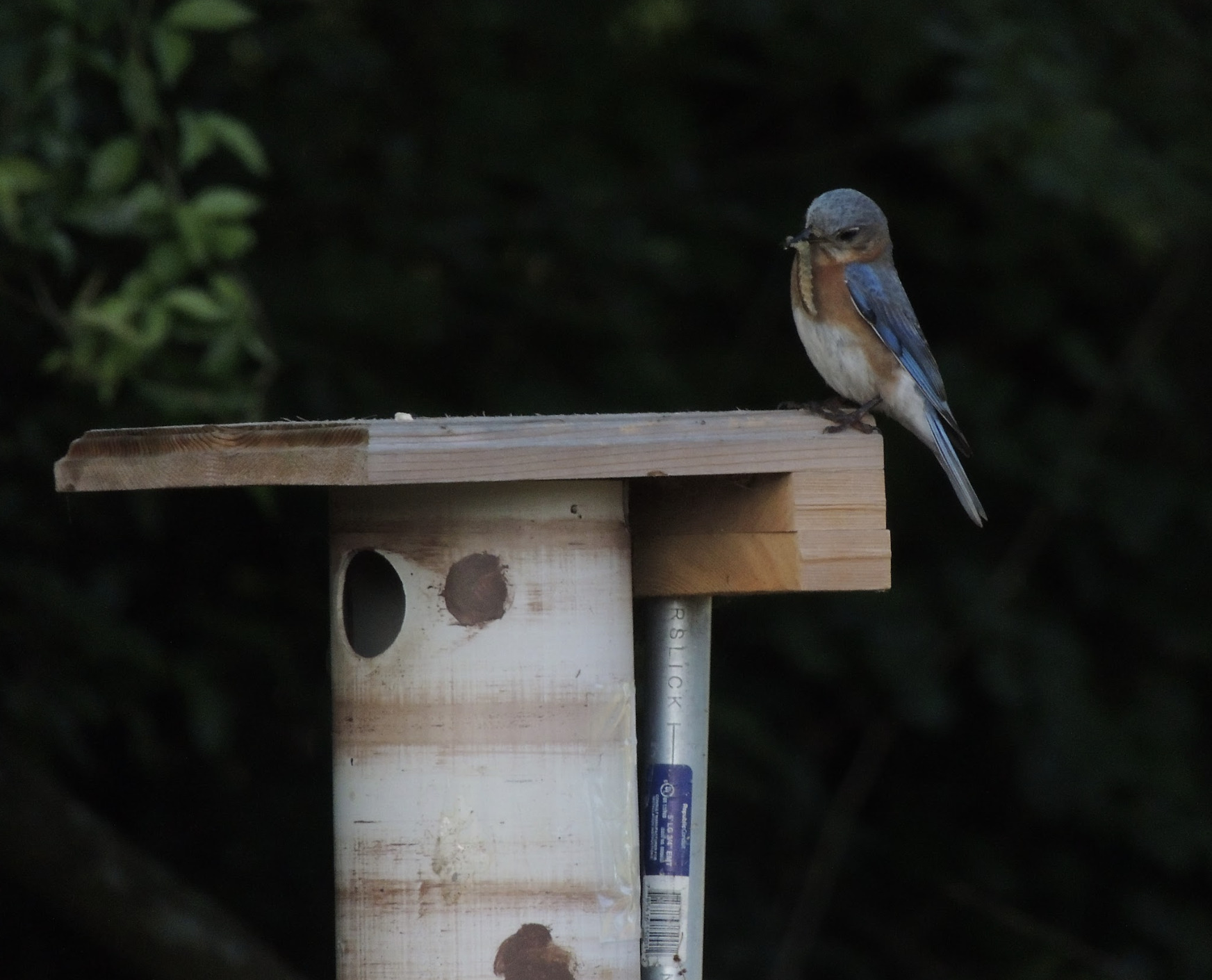
Footage from camera traps provided by Megan Caufman.
Megan L. Caufman
Wildlife Ecology and Conservation,
University of Florida,
Gainesville
The results of this study were recently published in the Journal of Field Ornithology:
Caufman, M. L., and K. E. Sieving. 2025. Poke, gape, or escape? Diurnal anthropogenic noise disrupts Eastern Bluebird (Sialia sialis) incubation and nest attendance behavior. Journal of Field Ornithology 96(4):3. https://doi.org/10.5751/JFO-00718-960403.
Header photo: Eastern Bluebird (Sialia sialis) by mirceax | Getty Images.